Night-time lights: A global, long term look at links to socio-economic trends
by Jeremy Proville, Daniel Zavala-Araiza, and Gernot Wagner
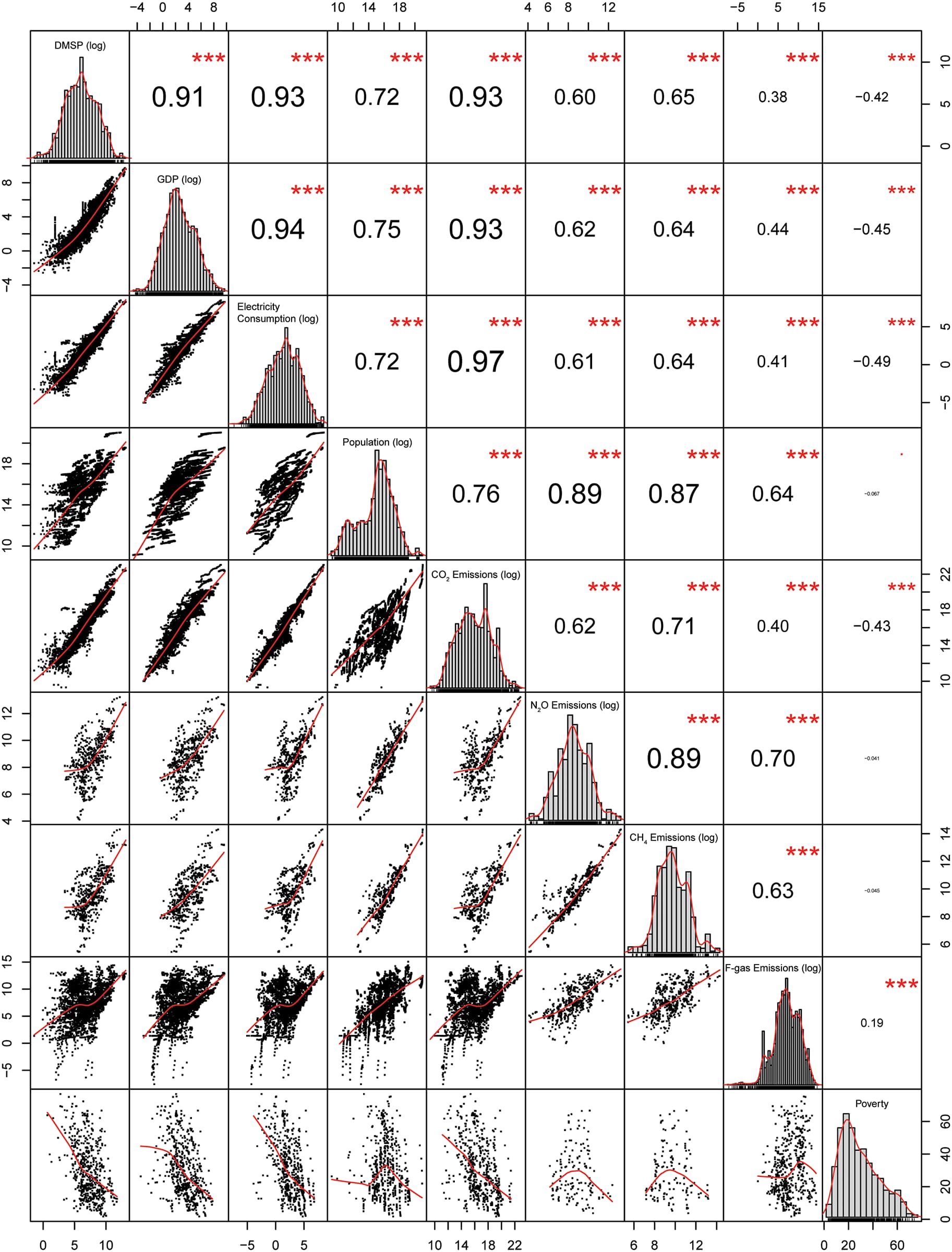
Fig 1. Correlation between area lit and a collection of socio-economic indicators.
Abstract:
We use a parallelized spatial analytics platform to process the twenty-one year totality of the longest-running time series of night-time lights data—the Defense Meteorological Satellite Program (DMSP) dataset—surpassing the narrower scope of prior studies to assess changes in area lit of countries globally. Doing so allows a retrospective look at the global, long-term relationships between night-time lights and a series of socio-economic indicators. We find the strongest correlations with electricity consumption, CO2 emissions, and GDP, followed by population, CH4 emissions, N2O emissions, poverty (inverse) and F-gas emissions. Relating area lit to electricity consumption shows that while a basic linear model provides a good statistical fit, regional and temporal trends are found to have a significant impact.
Full paper: “Night-time lights: A global, long term look at links to socio-economic trends”
Featured on TIME.com: Wilson, Chris. "See How the View of Earth From Space Has Changed Over 21 Years." TIME.com (21 April 2017).


