SCOPE
by Hidde Kolmeijer and Gernot Wagner

I’m a climate economist at Columbia Business School and author of six books, including Climate Shock and Geoengineering: the Gamble. Here you find my research, teaching, writing, speaking, and current preoccupations squarely focused on climate risks and solutions.
Connect on Bluesky, Mastodon, or LinkedIn, or let me email you with the latest.
Featured Posts (5 of 1,165)
by Hidde Kolmeijer and Gernot Wagner

by Mark Freeman, Ben Groom, Frikk Nesje, and Gernot Wagner

by Kevin Schwarzwald, Nathan Lenssen, Alia Bonanno, Thomas Bearpark, Radley Horton, and Gernot Wagner

Projects (7 of 15)

Published research in journals from Nature, Science, and PNAS to field journals across several disciplines, plus current working papers.

Course syllabi, Columbia CaseWorks case studies, Financial Times mini-case studies, and other teaching materials.
I (co-)teach Business and Climate Change, the most popular elective at Columbia Business School taken by 500 of 800 MBAs each year. I also teach Climate Policy, Climate Risk, and a travel course on Green Industrial Policy in Europe. (All are offered in the spring term, and most open via the usual cross registration channels.)

My monthly, globally syndicated column for Project Syndicate, translated into a dozen languages, and my earlier bi-weekly Risky Climate column for Bloomberg Green.
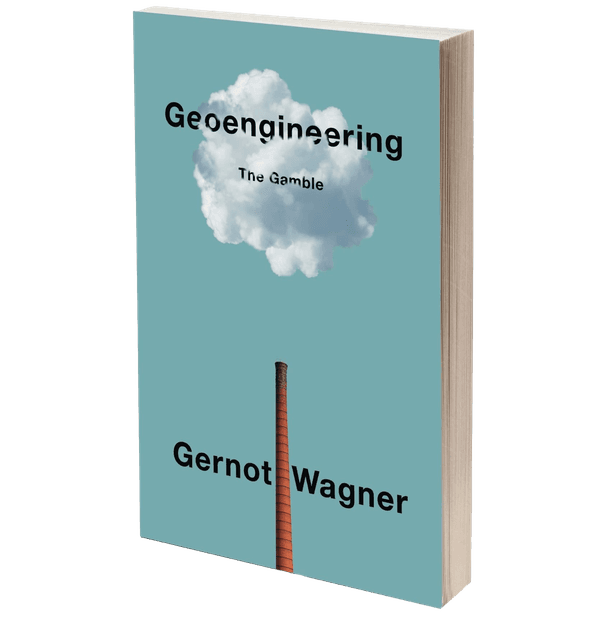
"An important read." (The Sunday Times) — "A stark warning." (The Guardian)
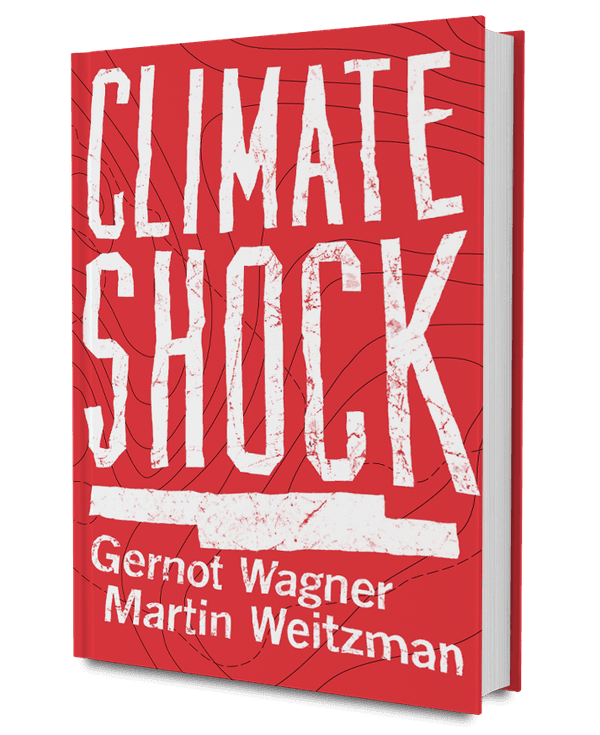
Read the NYT op-ed, the infamous pop quiz, our Salon feature, or Foreign Affairs and Atlantic essays. Watch the TEDx talk: “From Climate Shock to Geoengineering.”

Columbia Business School initiative with the mission to translate rigorous analysis into actionable insights and help build consensus among key decision-makers, while unapologetically flagging where business and public interests diverge.

Audio and video of radio and TV appearances, recorded talks, and other clips.